
Managing multiple WhatsApp accounts has become a routine part of daily operations for sales teams, customer support departments, marketing agencies, and businesses that rely on communication automation. When only a few accounts are involved, managing them is usually straightforward. However, as a project grows, technical challenges often begin to appear: unstable connections, authorization issues, time-consuming infrastructure adjustments, and other operational difficulties.
In many cases, the root cause is not the automation software itself but the way the network infrastructure is configured. That's why teams working with dozens or even hundreds of accounts pay close attention to choosing reliable proxy solutions. For example, MangoProxy offers residential, ISP, mobile, and datacenter proxies, allowing businesses to select the most suitable option for different use cases — from long-term account management to large-scale projects with distributed workloads.
Let's look at five of the most common mistakes people make when working with multiple WhatsApp accounts.
Mistake #1. Using One IP Address for Too Many Accounts
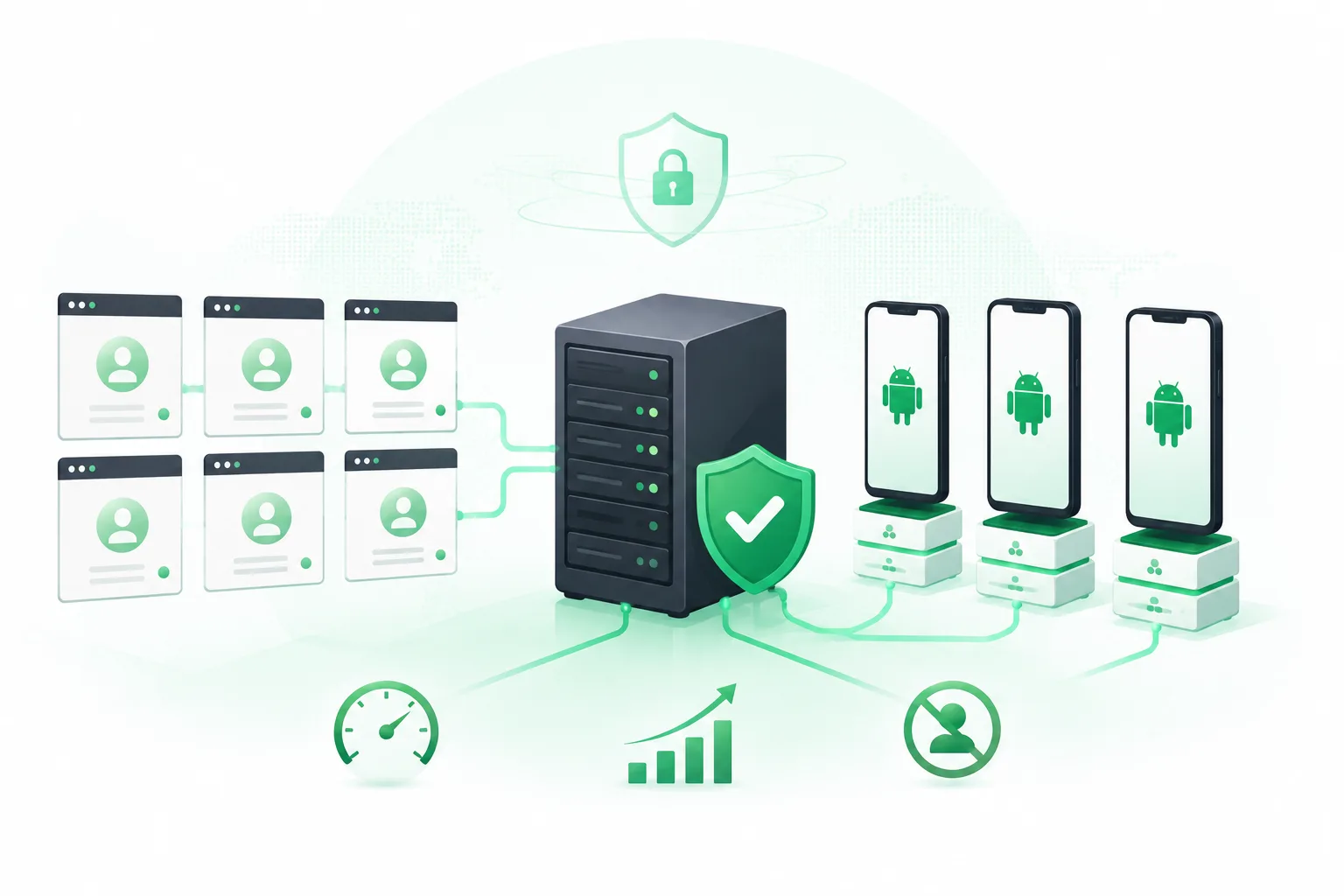
One of the most common mistakes is routing all accounts through a single IP address. While this may seem convenient at the beginning, it becomes increasingly difficult to manage as the number of accounts grows.
Each account has its own activity history, contact list, and usage pattern. When dozens of independent accounts share the same connection, managing the infrastructure becomes much more complicated.
A better approach is to distribute accounts across multiple IP addresses. This makes administration easier and allows the project to scale without rebuilding the entire network setup.
Mistake #2. Ignoring Geolocation
Another common issue is using IP addresses without considering their geographic location.
If an account is primarily used to communicate with users in a specific region, it's best to use an IP address that matches that location. Constantly switching between different countries without a clear reason only adds unnecessary complexity to the infrastructure.
For long-term projects, maintaining a consistent connection strategy and changing locations only when required is generally the better approach.
Mistake #3. Rotating IP Addresses Without a Clear Reason
IP rotation is not beneficial in every scenario. For tasks such as web scraping or data collection, rotating IPs can be essential. However, when managing long-term WhatsApp accounts, the opposite is often true.
If an account is used on a daily basis, maintaining a stable connection through the same IP address usually makes more sense. It creates a more consistent working environment and reduces unnecessary changes within the infrastructure.
Before choosing a proxy setup, it's important to understand the purpose of your accounts and then select the most appropriate proxy type.
Mistake #4. Using the Same Proxy Type for Every Task
There is no universal proxy solution that fits every workflow.
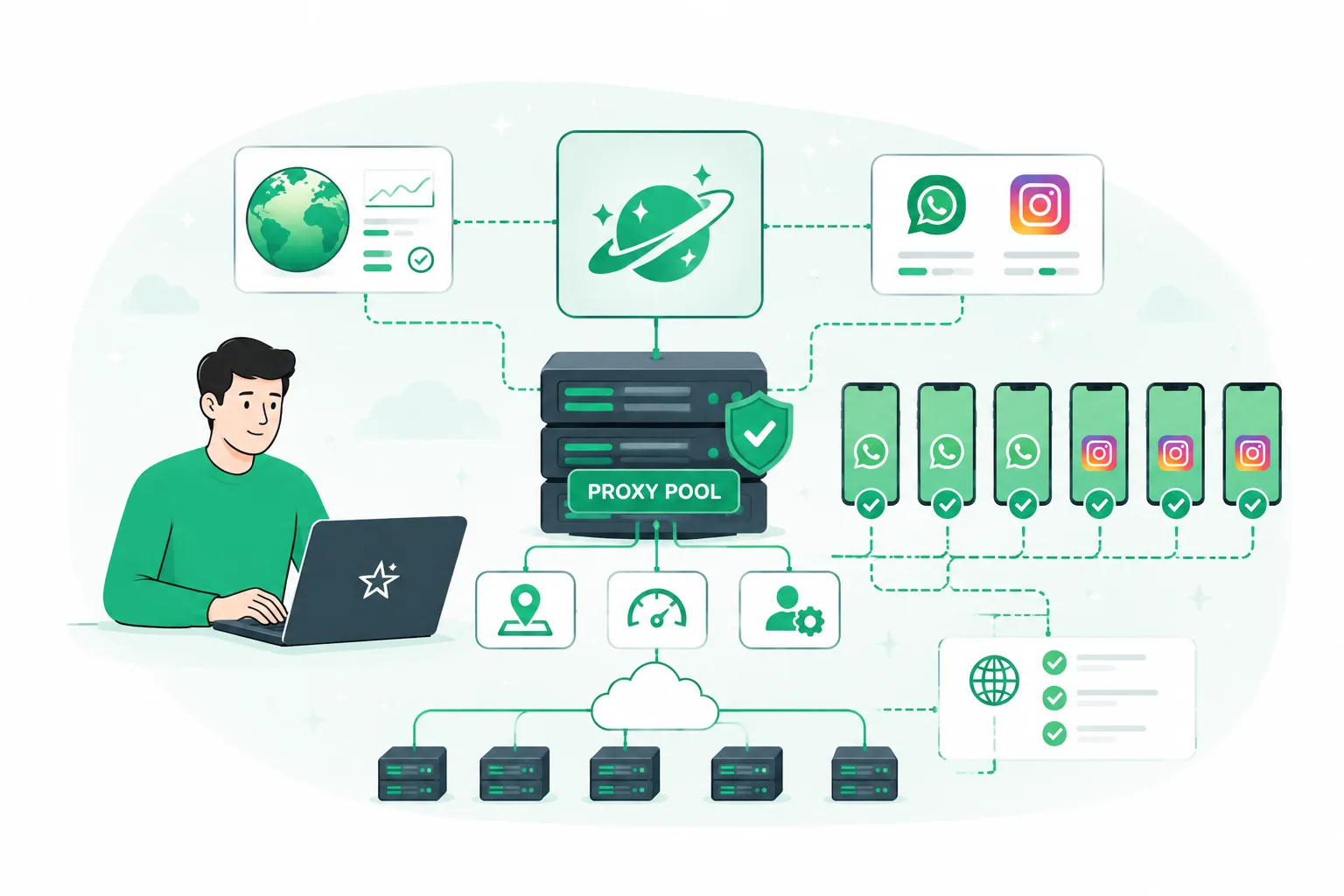
Static ISP proxies are commonly used for long-term account management because they provide a stable IP address. Residential proxies are well suited for projects that require a wide range of geolocations, while mobile proxies are useful for specific scenarios that benefit from mobile network IPs.
That is why modern proxy providers, including MangoProxy, offer multiple proxy types. This gives users the flexibility to choose the most suitable solution for each task instead of relying on a single option for every workflow.
Static ISP proxies
Best suited for: long-term WhatsApp account management, daily communication, automation.
Key advantages: stable IP address, high speed, reliable connection.
Things to consider: ideally, assign one IP to one account or a small group of related accounts.
Residential proxies
Best suited for: multi-location projects, scaling, flexible workflows.
Key advantages: real residential IPs, broad geolocation coverage.
Things to consider: frequent IP rotation is not always necessary for long-term accounts.
Mobile proxies
Best suited for: scenarios requiring mobile carrier IPs.
Key advantages: high trust level across many online services.
Things to consider: best suited for specialized use cases rather than the entire infrastructure.
Mistake #5. Poor Account Management Organization
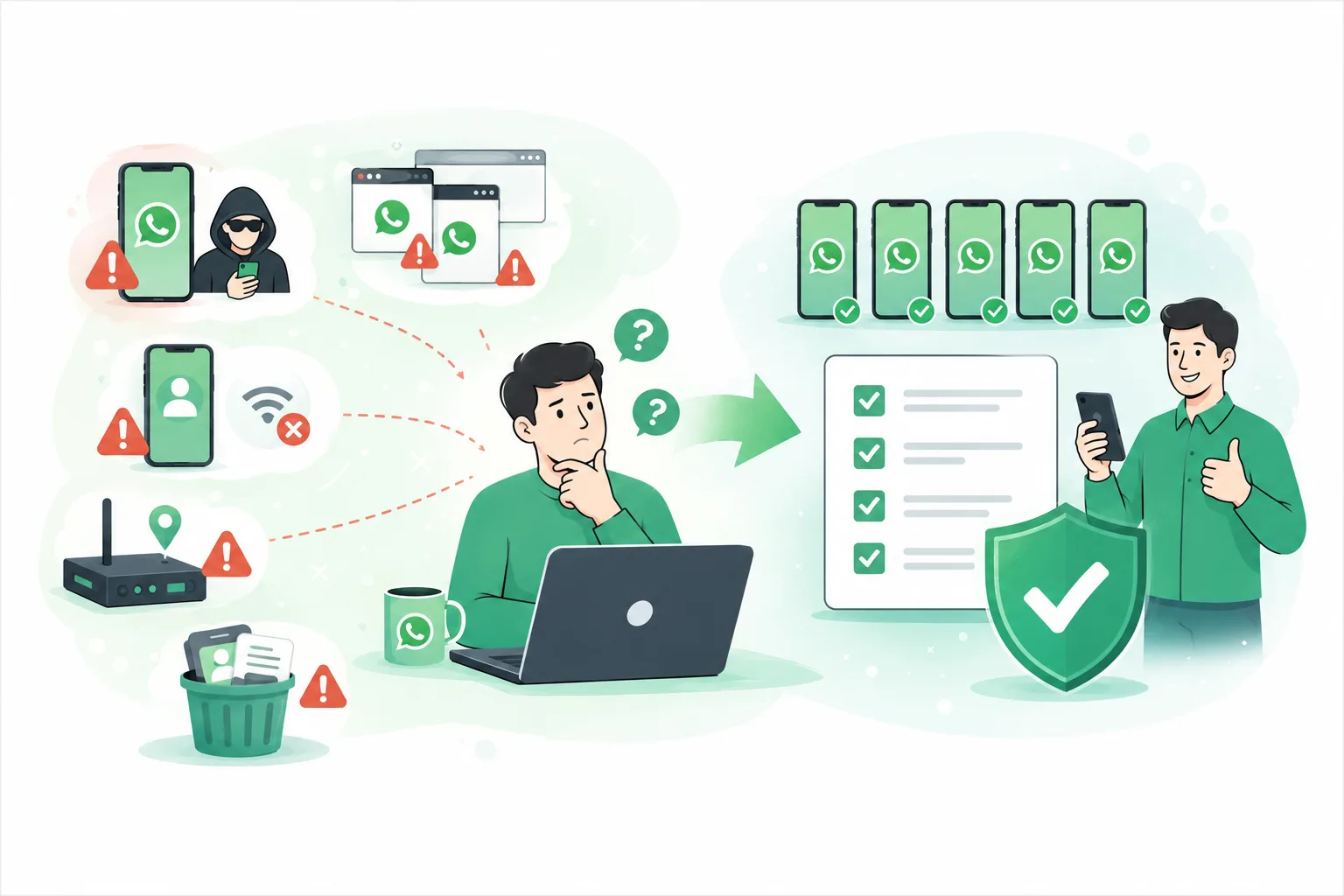
As the number of accounts grows into the dozens or hundreds, an unstructured approach quickly becomes difficult to maintain.
Without proper tracking, it becomes challenging to identify which account is assigned to which IP address, what settings have been changed, or which connections have already been tested.
A few simple practices can make account management much easier:
- Assign a dedicated IP address to each long-term account.
- Keep connection settings consistent.
- Maintain a record of account-to-IP assignments.
- Regularly monitor the health of your infrastructure.
- Avoid changing connection settings unless necessary.
Even these basic practices can significantly simplify future scaling.
Conclusion
Successfully managing multiple WhatsApp accounts depends not only on the automation platform but also on the quality of the underlying infrastructure. A well-planned connection strategy, the right proxy type for each task, and a structured approach to account management all contribute to a more reliable and scalable workflow.
The earlier these aspects are considered during infrastructure planning, the easier it becomes to expand your project while avoiding unnecessary technical challenges.
You can find the right proxy type for your setup at MangoProxy. Use promo code UNIMESSENGER for 8% off Static ISP Proxies.