
In 2026 automating Instagram and WhatsApp has become a standard for online business. Mass broadcasts, auto-funnels, inbound lead handling, working with dozens of accounts — all of this requires technical infrastructure.
And the key element of that infrastructure is the proxy.
The IP type is exactly what determines whether the accounts will work steadily or hit limits and bans. Most often the choice is between data-center and mobile proxies.
Let's break down what is safer for automation and scaling.
Why proxies became critical for Instagram and WhatsApp
In 2026, Instagram and WhatsApp use advanced antifraud algorithms. They analyze:
- IP address type
- login frequency
- device matches
- behavioral patterns
- network links between accounts
If dozens of accounts log in from one IP or from a hosting IP — the system quickly builds suspicion.
Especially sensitive to this are:
- mass broadcasts in Instagram Direct
- working with several WhatsApp Business accounts
- auto-funnels
- multi-accounting
Without proxies, scaling is practically impossible.
Data-center proxies: pros and risks
Data-center proxies are IP addresses owned by hosting providers.
Their advantages:
- low cost
- high speed
- easy setup
- availability in any geo
But the main downside is low trust.
Instagram and WhatsApp easily detect that the IP belongs to a data center. Such traffic doesn't look like a regular user's behavior.
During automation this can lead to:
- temporary limits
- identity-verification requests
- message-sending restrictions
- account bans
For tests or one account, data-center proxies can work. But when scaling, the risk grows exponentially.
Mobile proxies: why they are considered safer
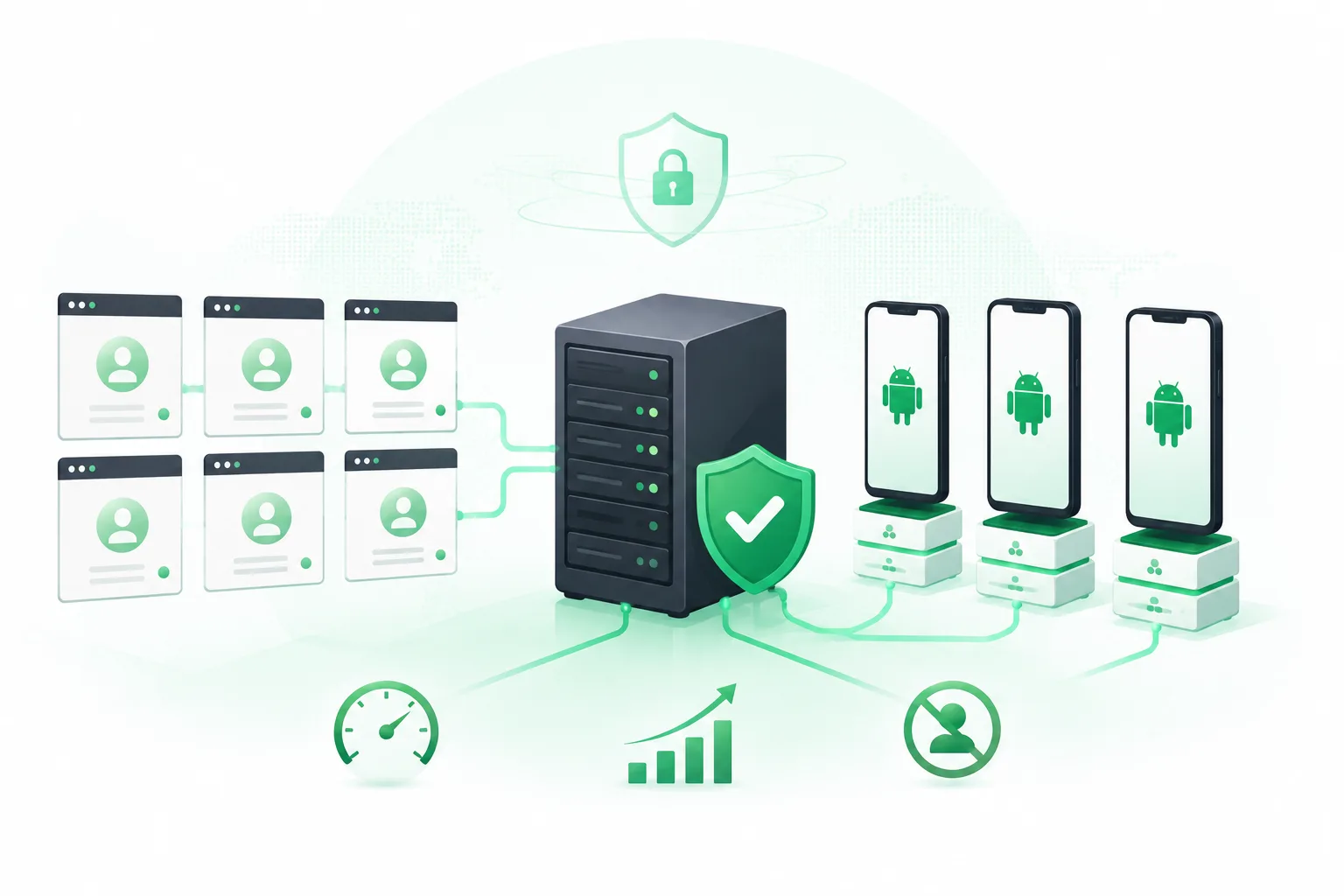
Mobile proxies run through IPs of real mobile carriers (4G/5G).
For Instagram and WhatsApp, this traffic looks like a normal user logging in from a smartphone. This matters especially during automation, where the system analyzes not only the message text but also the environment the login comes from.
The key factor isn't just having a mobile IP — it's a dedicated infrastructure without device sharing. If one IP is used by dozens of users, the trust level drops again.
For example, infrastructure solutions like Coronium.io provide 4G/5G mobile proxies based on physical devices with real carrier SIM cards. This format creates a stable IP environment that platforms perceive as natural mobile activity.
This lowers the chance of technical triggers when working with several Instagram and WhatsApp accounts.
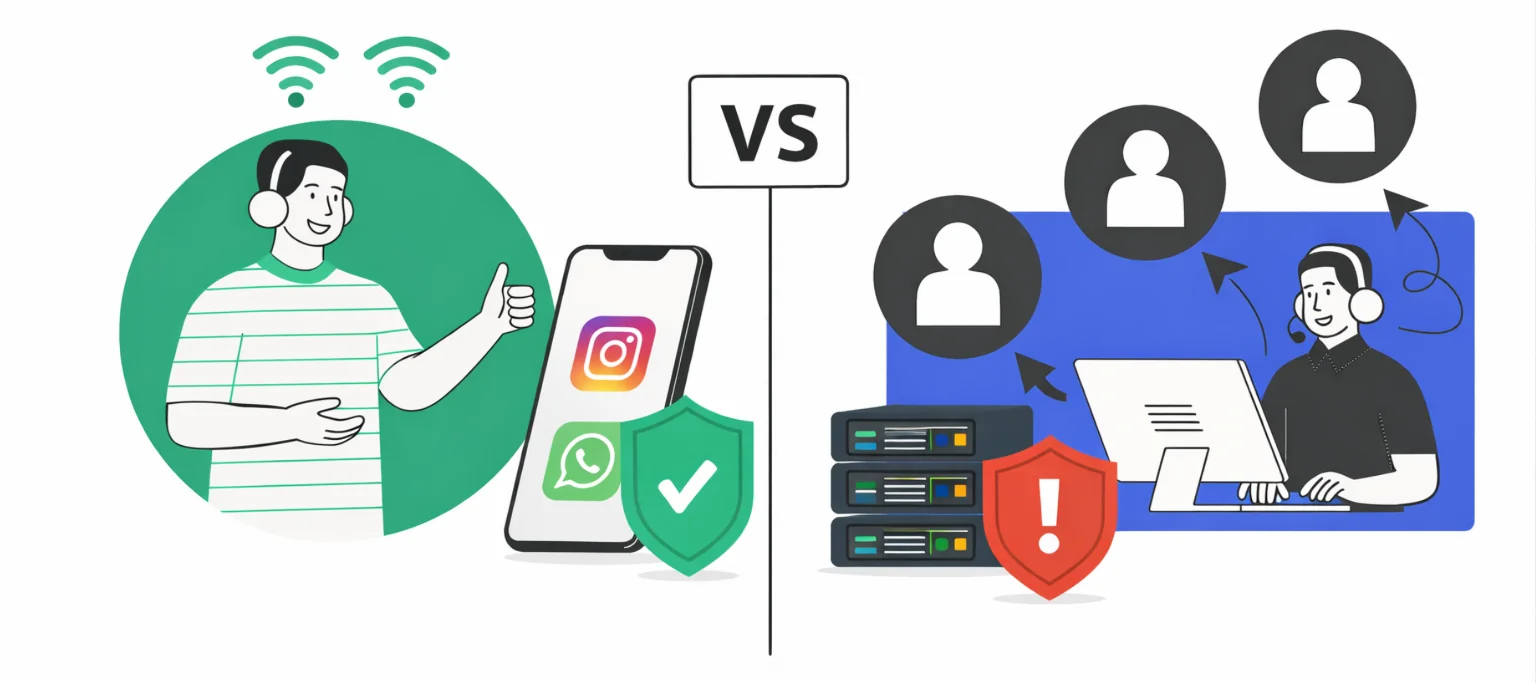
Comparison: mobile vs. data-center proxies
It's important to understand: mobile proxies don't give a "guarantee of no bans". But they significantly reduce the technical triggers for antifraud.
How proxies affect Instagram automation
For mass broadcasts, Instagram analyzes not only the message text but also the IP environment.
If:
- several accounts run from a single data-center IP
- the login comes from a suspicious network
- the IP changes constantly
When using mobile IPs, the behavior looks more natural. This matters especially when working through automation tools such as UniMessenger, where multiple accounts can be managed at once.
Automation without a stable IP environment always means elevated risk.
WhatsApp specifics in 2026
WhatsApp has become even stricter with mass broadcasts.
Algorithms track:
- the number of outgoing messages
- the share of complaints
- sharp activity spikes
- IP type and device
Data-center IPs get filtered more often.
The mobile environment looks more natural since WhatsApp was originally designed for mobile users.
When data-center proxies are still suitable
Data-center proxies can be used:
- for testing
- for working with a single account
- for non-aggressive automation
- in white-hat niches with low message volume
But once you scale to 10–50+ accounts, the risks start to add up.
Mistakes when picking proxies for automation
One common mistake is saving money on IP quality.
You'll also often see:
- using shared proxies
- constant IP changes
- no distribution of accounts across different addresses
- mixing data-center and mobile IPs in one infrastructure
How to build a resilient automation infrastructure
In 2026 a stable automation system is built not only around software but also around IP architecture.
The base model includes:
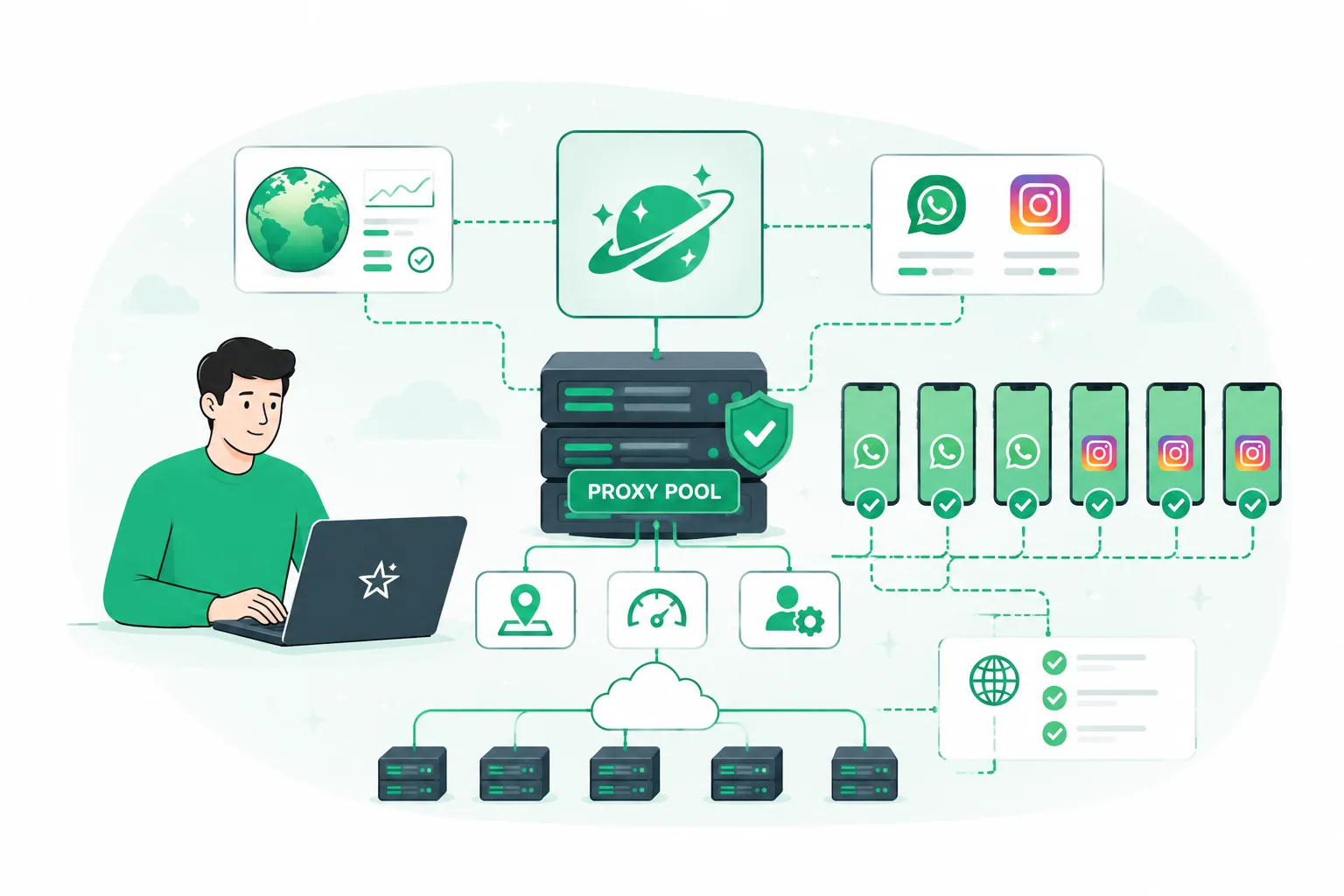
one account — one stable IP; no overlap between accounts; gradual ramp-up of activity; use of an automation tool (e.g., UniMessenger); a mobile IP infrastructure with a high trust level. When working with 10–50+ accounts, it's especially important that the proxies are not data-center or massively shared. Dedicated mobile IPs (for example, via Coronium.io) minimize network ties between accounts and reduce the risk of bans when scaling broadcasts.
Automation without a well-thought-out IP environment always means elevated risk.
Automation + a stable mobile infrastructure — that's a systemic approach.
What to choose in 2026?
If the task is to test a hypothesis or run 1–2 accounts, data-center proxies may be enough.
If the goal is scaling, multi-accounting, and stable auto-funnels, mobile proxies become the safer choice.
The difference between them isn't just the price. It's the trust level on the platform's side.
Conclusion
Automating Instagram and WhatsApp in 2026 is impossible without a well-thought-out IP infrastructure.
Data-center proxies remain a budget option, but scaling them raises the risk of limits.
Mobile proxies provide a more natural environment, which makes them the preferred choice for multi-accounting and mass broadcasts.
Safety in automation isn't just the tool — it's the infrastructure.